
Every construction project team believes they’re considering every detail – until someone with a different perspective asks a question no one else considered.
Those moments don’t just change conversations; they change outcomes. And increasingly, they’re reshaping how forward-thinking construction teams approach design, planning, and execution.
WHY DIVERSE TEAMS DELIVER stronger outcomes for clients, project teams, and the built environment
Every building reflects the decisions of the people who brought it to life.
From preconstruction planning and safety strategy to design coordination and field execution, projects are shaped by countless technical choices – as well as many rooted in human understanding. The strongest outcomes happen when those decisions are informed by a range of perspectives.
As construction evolves alongside the communities it serves, one thing is becoming increasingly clear: diverse teams don’t just change who is at the table – they improve how projects are delivered.
At Leapley Construction, this understanding has guided how we build teams and develop talent. Expanding representation was never viewed as a trend or initiative; it was recognized early as a strategic advantage – a way to reduce blind spots, strengthen collaboration, and ultimately deliver better results for clients.
Construction serves diverse users – teams should reflect that reality
Building end-users have different experiences, needs, and expectations. When the teams delivering projects lack the same diversity reflected in the real world, unintentional blind spots can emerge.
Sometimes the impact of limited perspectives is subtle. A corporate workplace designed around a single work style may unintentionally overlook quiet focus areas or wellness spaces that reflect how people actually work. In research and laboratory environments, workflow decisions — from bench configurations to circulation paths – benefit from input beyond a single perspective to ensure spaces support a wider range of users. Commercial repositioning projects often reshape how people move through and experience a building. Diverse perspectives can influence decisions as simple as lighting placement and intensity – factors that directly impact how safe and welcoming a space feels to different users. Even jobsite planning can reflect assumptions – from narrow PPE sizing to field office layouts – that don’t account for the full range of people contributing to the work.
These gaps rarely come from lack of expertise. They happen when everyone around the table shares similar experiences. Diverse teams introduce new questions early – when changes are easier, risks are lower, and innovation is still possible.
The industry is evolving – and the data supports it
Construction remains one of the least diverse major industries in the United States. According to the U.S. Bureau of Labor Statistics,, women represent approximately 14% of the construction workforce, with even fewer in field and operations leadership roles.
Yet research across industries consistently shows that diversity improves performance:
- McKinsey & Company has found that organizations with greater gender diversity are 27% more likely to outperform financially than less diverse peers.
- Research published in Harvard Business Review shows that cognitively diverse teams approach complex challenges differently and often identify solutions faster because they evaluate problems through multiple lenses.
- Research on psychological safety shows that inclusive environments encourage team members to raise concerns earlier — a critical factor in risk mitigation and safety on complex projects.
In a field defined by complexity, schedule pressure, and coordination challenges, expanded perspectives strengthen decision-making.
Representation changes how projects are delivered
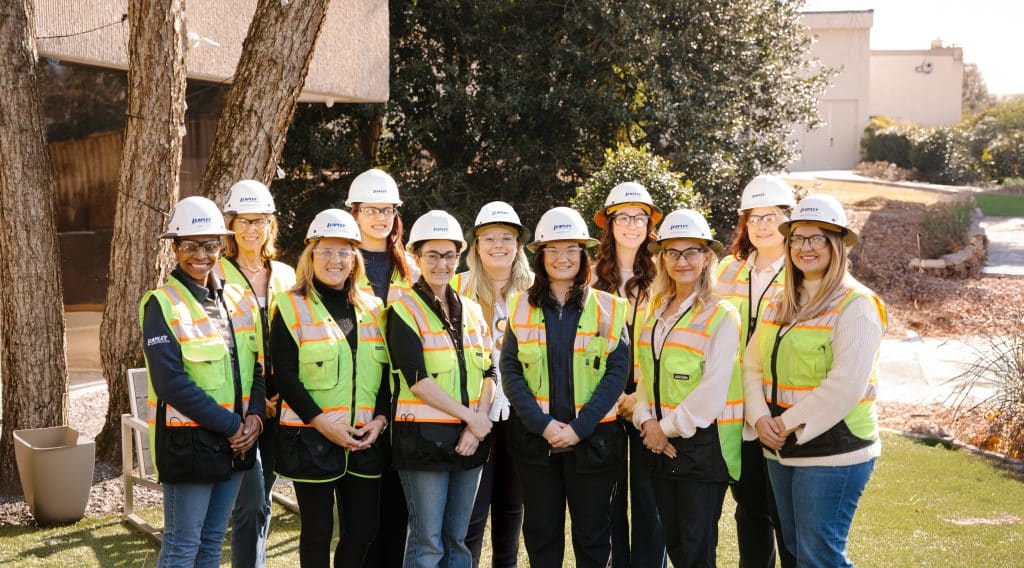
Long before workforce diversity became a widespread industry conversation, Leapley Construction made intentional decisions to broaden representation across operations and leadership – recognizing that stronger teams produce stronger outcomes. Today, women hold approximately 30% of operations roles at Leapley, more than double the industry average, and represent half of the senior leadership team guiding company strategy and execution. That representation isn’t about optics; it directly influences how projects are planned, communicated, and executed.
Women across preconstruction, project management, safety, and field leadership contribute perspectives that expand how teams evaluate risk, engage with clients, and solve challenges.
Our female teammates bring great technical expertise in scheduling, pricing, and complex project coordination, but they also bring a different attention to detail that impact overall project success. For example, Superintendent Tammy Tatum is famous for her pre-punch walk-throughs, flagging dozens of issues on site – ranging from fingerprints on glass demountables to light switches erroneously placed behind doors. “The crews think I’m crazy, but the way I see it, if I wouldn’t tolerate it in my own house, I won’t tolerate it on site. I am constantly flagging and correcting issues that others miss so they never hit our punch list, and we deliver a pristine space to the client.” Likewise, on a recent microbiology lab build-out, Project Manager Jennifer Tutt was the only one who identified that door hardware was installed backwards – after sign-offs from the male superintendent and multiple trade partners. “I took one look at the doors and knew the security hardware had been omitted – a detail no one else remembered from the first revision of the documents. I asked the superintendent to check the packaging, and he found the missing pieces and fixed the doors. I’m glad we had the right work in place for the punch walk with the owner and architect.”
These contributions aren’t exceptional moments – they demonstrate how broader representation strengthens the collective intelligence of a team.
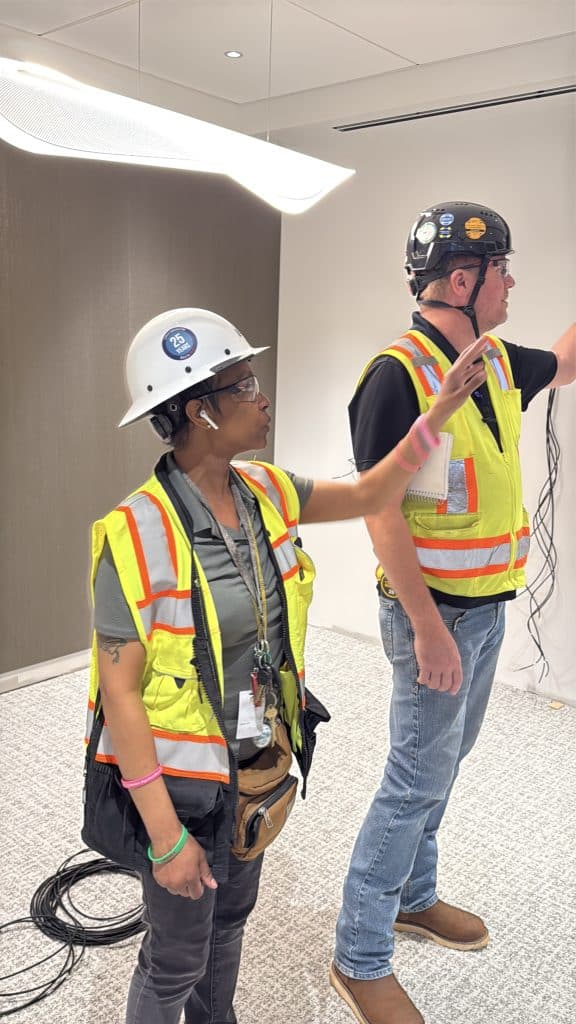

Designing job sites that reflect the workforce of today
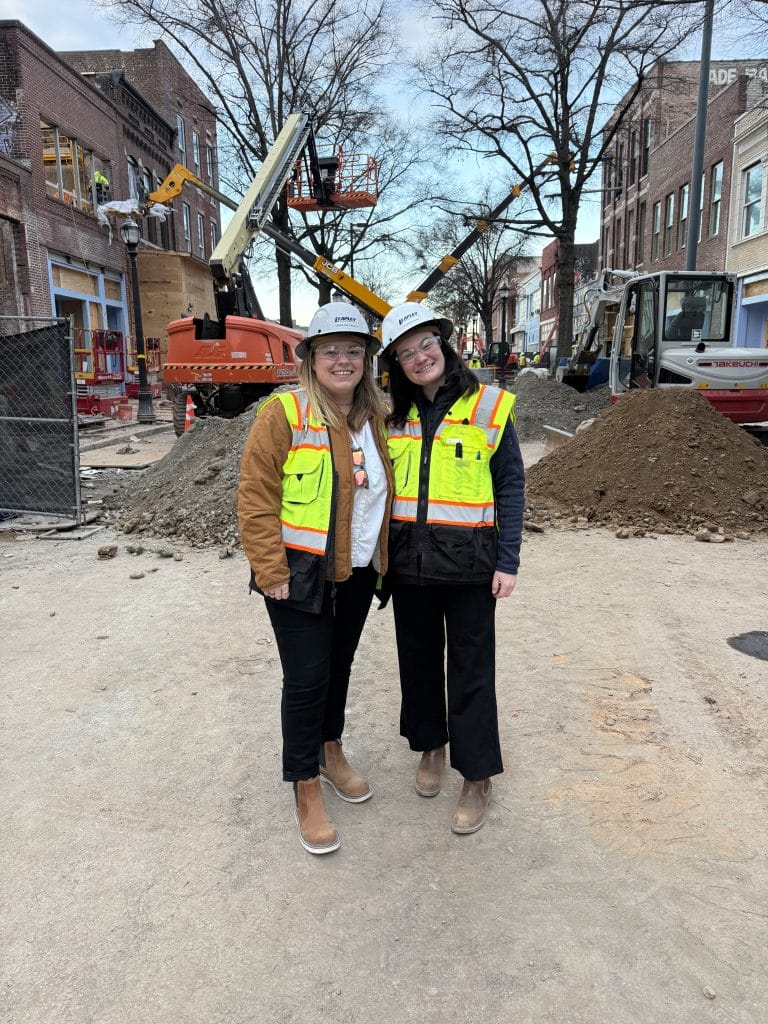
Inclusive thinking doesn’t stop at the finished building. It extends to how projects are built and how teams are supported in the field.
On one large corporate headquarters project, Leapley intentionally programmed a dedicated mother’s room within the field office to support pregnant and nursing team members. The adjustment required minimal impact to the project footprint but sent a clear message: the jobsite was designed for real people with real needs.
Rather than creating disruption, the change reinforced engagement, strengthened team trust, and demonstrated that inclusion and performance are not competing priorities.
Beyond individual projects, Leapley continues to embed inclusive thinking into operational practices, ensuring diverse perspectives are represented during early planning conversations where critical decisions shape project success.
Diversity strengthens problem-solving – and strengthens projects
Construction is fundamentally about solving complex problems under changing conditions. Diverse teams bring multiple viewpoints to the same challenge, leading to:
- Earlier identification of risks during preconstruction
- More inclusive design coordination
- Improved communication across stakeholders
- Stronger safety planning and awareness
- Solutions that better reflect real end-user experiences
When teams include varied perspectives, they expand the lens through which problems are evaluated – reducing blind spots and increasing adaptability.
Increasingly, clients recognize that diverse teams are not only more representative of the communities they serve – they are more effective at anticipating challenges and delivering resilient solutions.
Building the future of construction
Women in Construction Week offers an opportunity not only to celebrate progress but to recognize where the industry is heading.
The future of construction will still be defined by technical excellence, craftsmanship, and reliability. But the companies leading the next generation of projects will be those that intentionally cultivate diverse teams capable of seeing challenges from multiple angles – integrating inclusion not as a separate initiative, but as part of how great projects are built.
At Leapley Construction, that commitment continues to shape how we recruit, develop, and support our teams – and how we deliver stronger outcomes for the clients and communities we serve.
Because better perspectives don’t dilute expertise – they expand it. And they build better projects.